Jousting is a contest in which two mounted riders charge at each other with lances, aiming to break the lance on the opponent. It grew out of medieval cavalry training and the tournament, became the showpiece of royal courts, faded in the 1600s and has returned today as both theater and a competitive sport.
Jousting in one paragraph
A joust is a one-on-one contest between two riders on horseback, each carrying a long lance. They gallop toward each other along a set course, and each tries to strike the other cleanly. In the classic tournament joust, the goal was not to kill or even necessarily to unhorse the opponent but to break your lance against him. As the Royal Armouries, Britain’s national collection of arms and armor, explains, the aim of jousting was to break your lance on your opponent while charging at each other on horseback at great speed.
Where jousting came from
Jousting grew out of the way heavy cavalry fought in the High Middle Ages, when armored riders charged with a lance couched under the arm. Practicing that charge became a sport, and the sport became a spectacle.
The earliest tournaments were rough affairs. Rival teams of knights fought across open country in a melee, trying to capture opponents and their horses, armor and ransoms. Over time, the tournament became more organized and more theatrical, and the individual joust became its star event.
Tournaments were, in the words of the Royal Armouries, sports events for the rich and powerful, popular with medieval kings and lords. Armor, decorated lances and costly horse trappings let a knight show off his wealth and skill in front of a crowd.
The tilt, the lance and the armor
The most important safety invention was the tilt, a barrier down the middle of the lists that kept the horses from colliding. It began as a cloth in the 14th century and had become a wooden fence by the 15th, which is why jousting over a barrier is called tilting. The barrier also kept riders at an angle that made the lance more likely to break.
Equipment became highly specialized. Tilt armor was made to withstand the enormous impact of a joust and was heavy enough that a knight usually needed a squire to help him into it. Some jousts had their own gear: the Royal Armouries owns a saddle made for the Hohenzeuggestech, a joust popular in German-speaking lands in the late 1300s, which lifted the rider almost upright in the stirrups so he was harder to unseat. Its aim, too, was to break the lance rather than unhorse the opponent.
Lances for sport were often blunted, or rebated. That did not make jousting safe. At the Field of Cloth of Gold in 1520, the great meeting of the English and French courts, the Royal Armouries notes that tilting with blunt lances lasted more than a week and that one French knight died tilting against his own brother.
How jousts were scored
Rules varied by place and period, but scoring generally rewarded clean breaks on the right target. A Royal Armouries record of a 16th-century lance describes jousters scoring points by breaking a lance against the opponent’s helm. In England, a set of rules drawn up by John Tiptoft in 1466 is still used as a model by some modern jousters. One modern adaptation, described by Medievalists.net, awards points like this:
- Lance broken on the arm: 1 point.
- Lance broken on the chest: 2 points.
- Lance broken on the shield: 3 points.
- Lance broken tip to tip against the opponent’s lance: 5 points.
- A strike below the waist: disallowed, with disqualification for repeat offenses.
Tournament words to know
A few terms will help you follow the action at any tournament, old or new.
- Lists: the enclosed field where the jousting takes place.
- Tilt: the barrier between the two riders, and the name for jousting along it.
- Rebated lance: a blunted lance used for sport rather than war.
- Tourney: a mounted team combat, one of the three main tournament events alongside the tilt and foot combat.
- Melee: the chaotic group fight of the earliest tournaments.
Royal jousters and royal accidents
Kings jousted too, and the risks were real. Henry VIII took part in tournaments himself, and the Royal Armouries in Leeds still displays the armor made for him to fight on foot at the Field of Cloth of Gold. Across the Channel, Henry II of France was struck by a lance splinter during a tournament in Paris in the summer of 1559 and died of the wound in July. After that, jousting ended as a sport in France.
By the 17th century, jousting had largely given way to other equestrian sports. It lived on in pageants and romantic revivals, such as the Eglinton Tournament of 1839.
How modern jousting works
Jousting today comes in three main forms, and it helps to know which one you are watching.
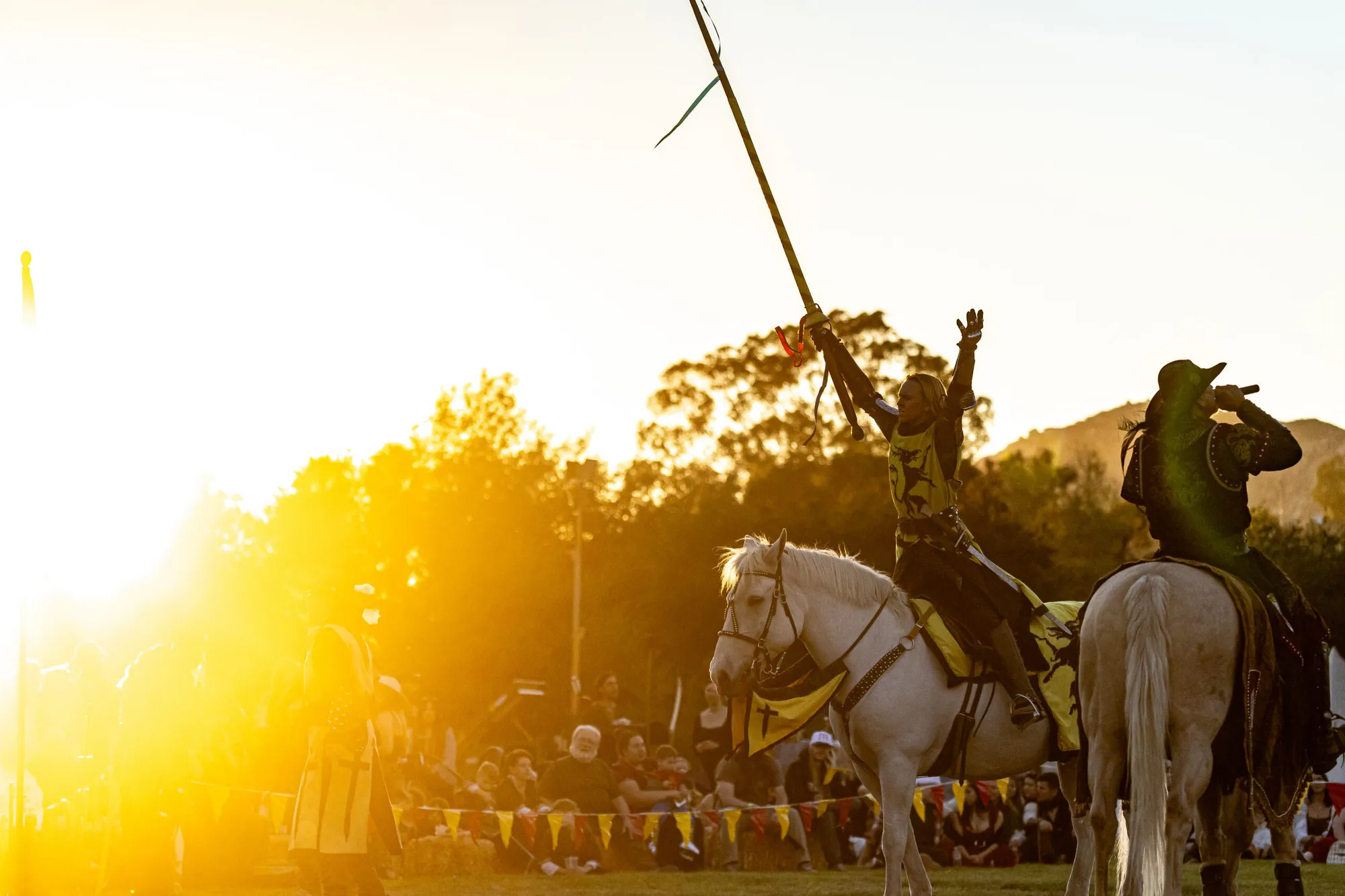
- Theatrical jousting: the kind seen at Renaissance faires, medieval festivals and dinner shows. Riders are skilled horsemen and the hits are real, but the outcome and story are planned for the crowd, with heroes, villains and plenty of showmanship.
- Competitive jousting: a full-contact sport in armor, with real scoring and no fixed result. Breakaway lances made of light wood, first developed in the early 1970s, are designed to shatter on impact. Tournaments run on an international circuit, including an annual Easter tournament at the Royal Armouries in Leeds, England.
- Ring jousting: in Maryland, where jousting has been the official state sport since 1962, riders gallop an 80-yard course and try to spear small suspended rings with a lance within 8 seconds. Men, women and children compete, and tournaments run from May to October.
Where to see a joust in Southern California
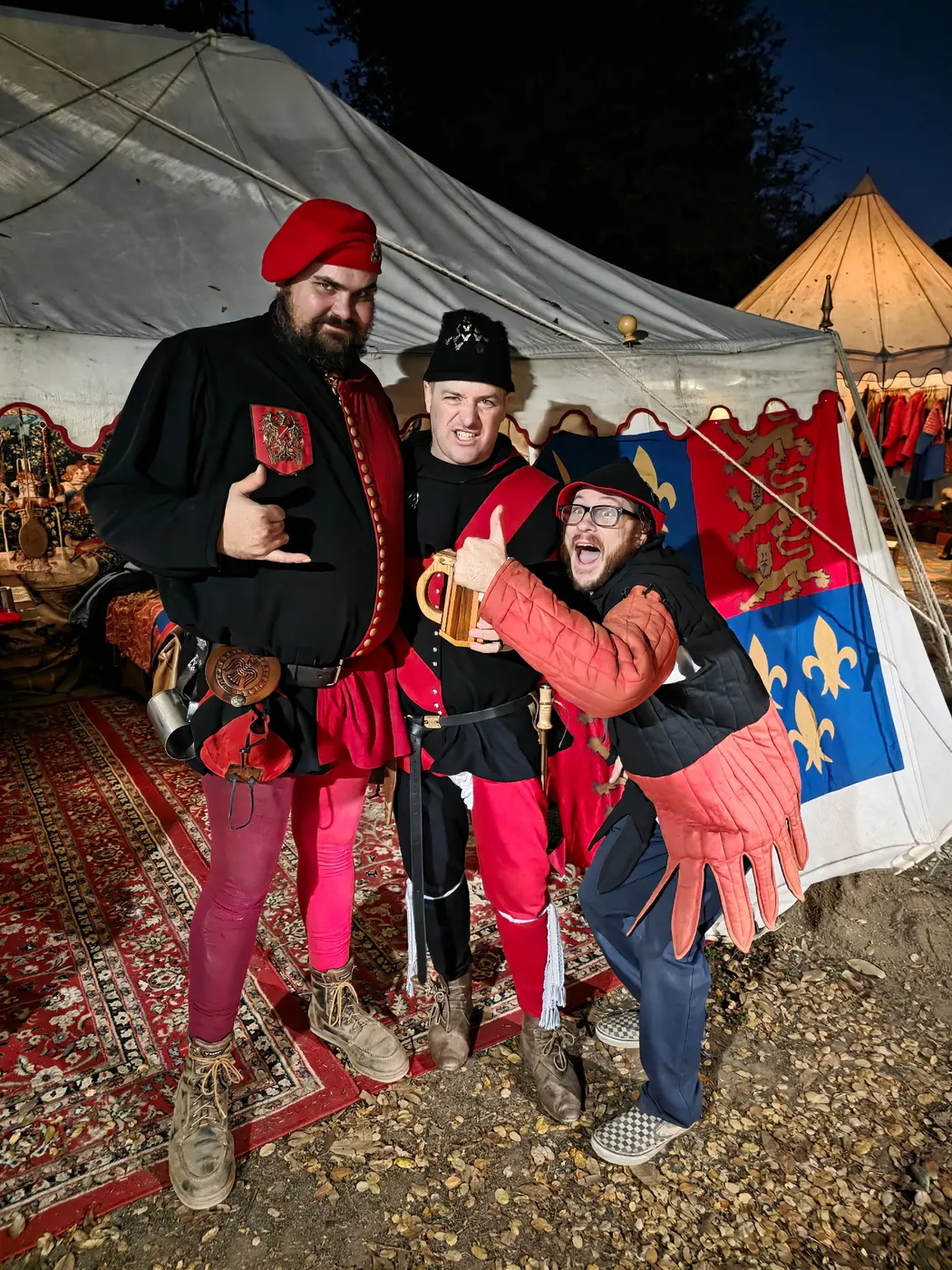
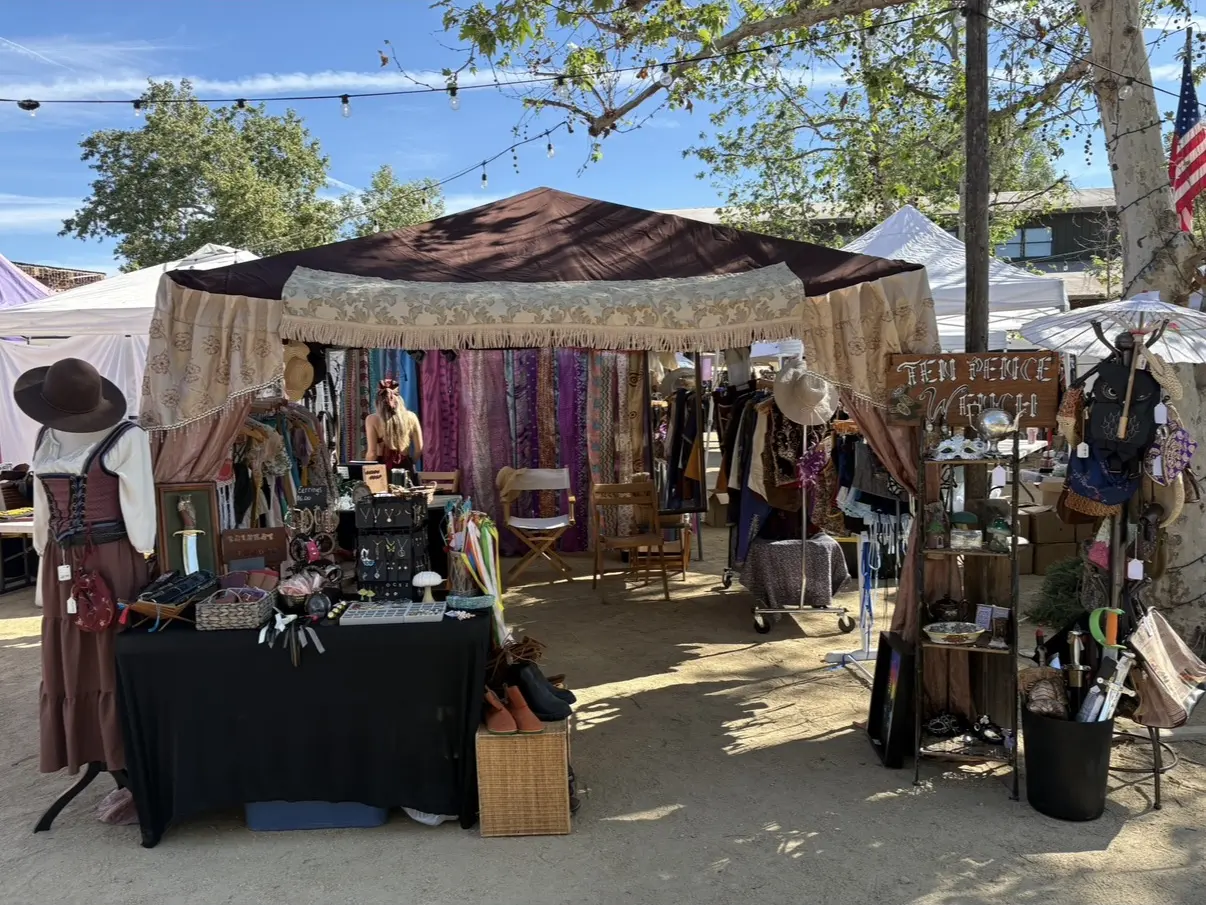
In Southern California, jousting is a staple of Renaissance faires and medieval festivals, especially in spring and early summer, and it is also part of year-round dinner-tournament shows. In December, the Yuletide Medieval Festival in Lakeside includes knights in tournament as part of its 1420 setting.
Wherever you watch, sit near the middle of the lists for the best view of the moment of impact, listen for the crack of the lance and give the horses room when they pass. The riders are working hard, but the horses are the real athletes.
Questions
Is jousting real or fake?
Both exist. Theatrical jousting at faires and shows uses real riders and real contact but a planned story and result. Competitive jousting is an unscripted, full-contact sport with scoring, held at tournaments in Europe and elsewhere.
What is the goal of jousting?
In the classic tournament joust, the goal was to break your lance cleanly on your opponent, not to kill him. Points were scored for breaks on target areas such as the helm, shield or chest.
Why is it called tilting?
Tilting comes from the tilt, the barrier that separated the two horses. It began as a cloth in the 1300s and became a wooden fence by the 1400s, and jousting along it became known as tilting.
What is the state sport of Maryland?
Jousting, adopted in 1962. Maryland jousters compete in ring tournaments, spearing small suspended rings with a lance at a gallop rather than charging at an opponent.
Sources
- Knights and Castles (learning resource), Royal Armouries
- Henry VIII’s Foot Combat Armour, Royal Armouries
- Jousting Saddle (VI.94), Royal Armouries
- The Modern World of a Medieval Sport, Medievalists.net
- Maryland State Sport - Jousting, Maryland Manual, Maryland State Archives
- Jousting, Wikipedia