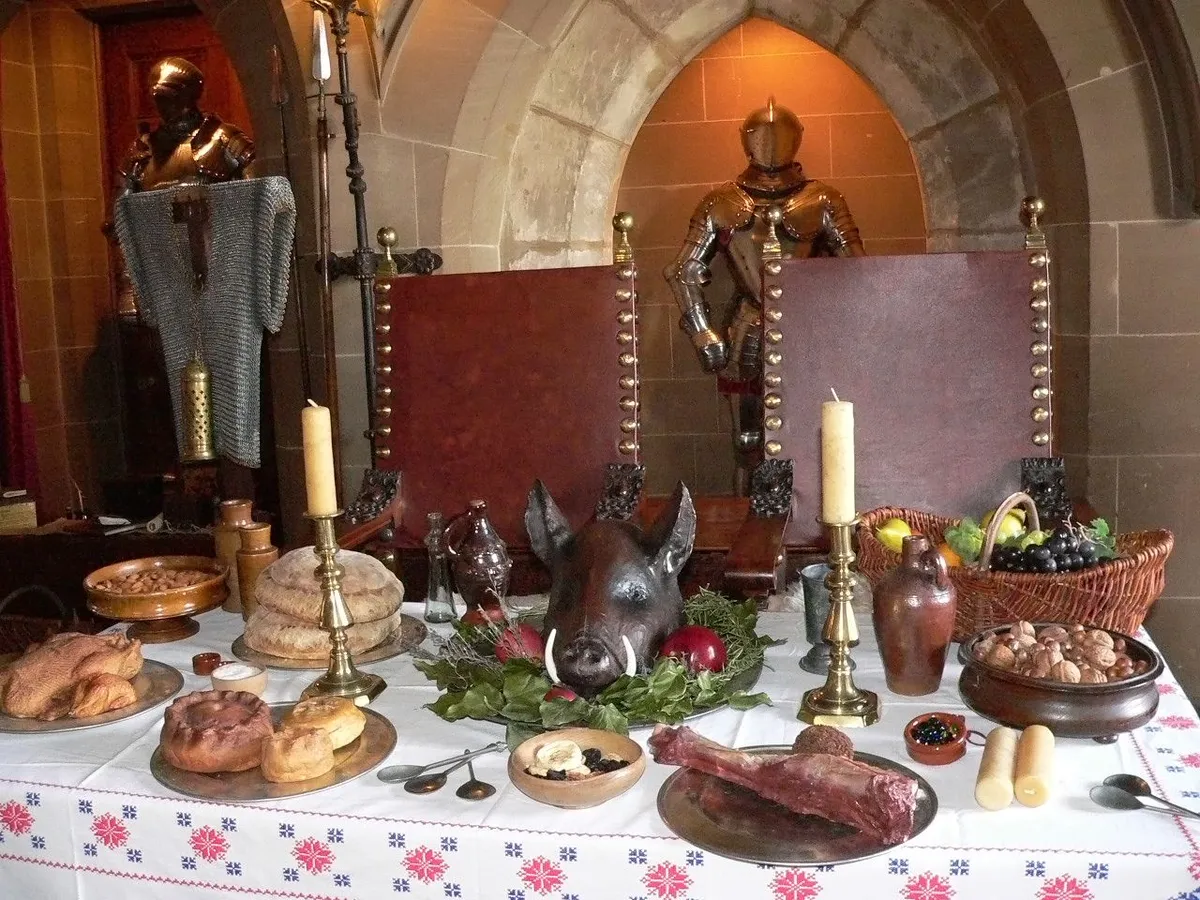
The Medieval Christmas Feast: Boar's Head, Subtleties and Frumenty
What a Christmas feast looked like around 1420: Advent fasting, the boar's head and its carol, many-dish courses, sugar subtleties, peacock, pies, frumenty.
Read the guideBy Proclamation of the Court
Hear Ye! Hear Ye! By Proclamation of the Court! Let it be known throughout the realm that all good folk are summoned to attend the most noble St. Nicholas Day Feast, where the Yuletide spirit shall be celebrated with great cheer, hearty fare, and merry revelry!
Come, take thy place at the King’s table and partake of a grand five-course holiday-inspired sit-down feast, prepared for nobles and commoners alike:
With thy feast shall come a goblet of fine ale or a glass of wine, while those not yet of one-and-twenty years shall be served a festive beverage worthy of the occasion.
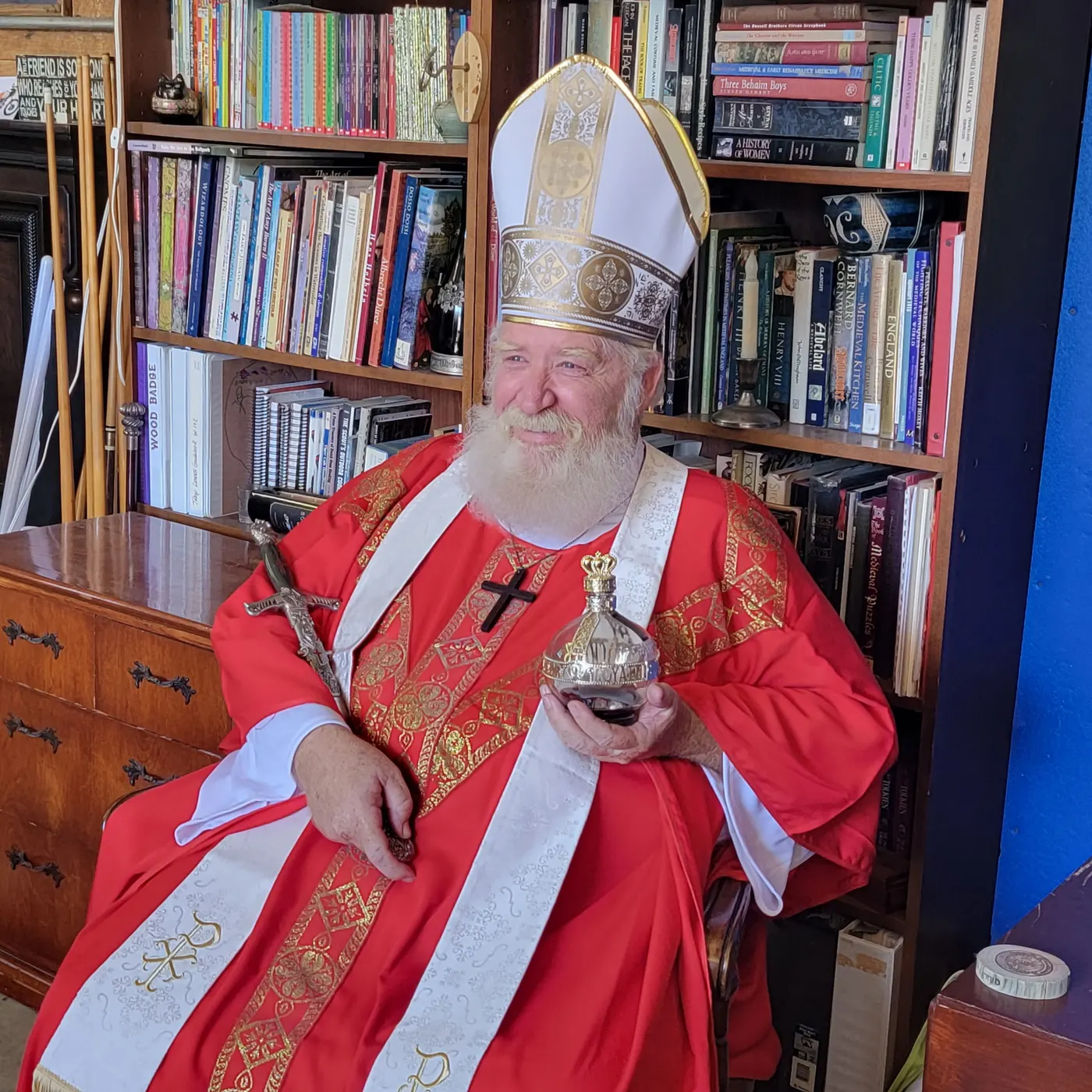
As each course is served, the hall shall ring with music, laughter, and spectacle, for the Most Honorable King Henry V and the beloved St. Nicholas of Myra shall grace the gathering with their presence. The finest minstrels, jesters, musicians, storytellers, and entertainers in all the Shire shall perform between courses, filling the hall with holiday wonder. And think not the merriment ends when the final plate is cleared!
Each honored guest shall depart bearing:
and should fortune smile upon thee, far more holiday adventure than thou didst expect!
The Feast is Served Saturdays at the Sixth Hour of the Evening (6:00 PM) and Sundays at the Twelfth Hour (Noon)
So, don thy finest holiday raiment, gather thy family and companions, and hasten to secure thy place at the St. Nicholas Day Feast.
Raise thy cup in good company as the wassail flows, the tables groan beneath their bounty, and the halls echo with the merriest celebration of the season. Fail not, good people… for such a feast comes but once each Yuletide! May St. Nicholas bless thy table, King Henry V welcome thee to his court, and the spirit of Christmas fill thy heart with joy!
What a feast looked like in the England of King Henry V, course by course: the food, the drink and the manners of the hall.
What a Christmas feast looked like around 1420: Advent fasting, the boar's head and its carol, many-dish courses, sugar subtleties, peacock, pies, frumenty.
Read the guide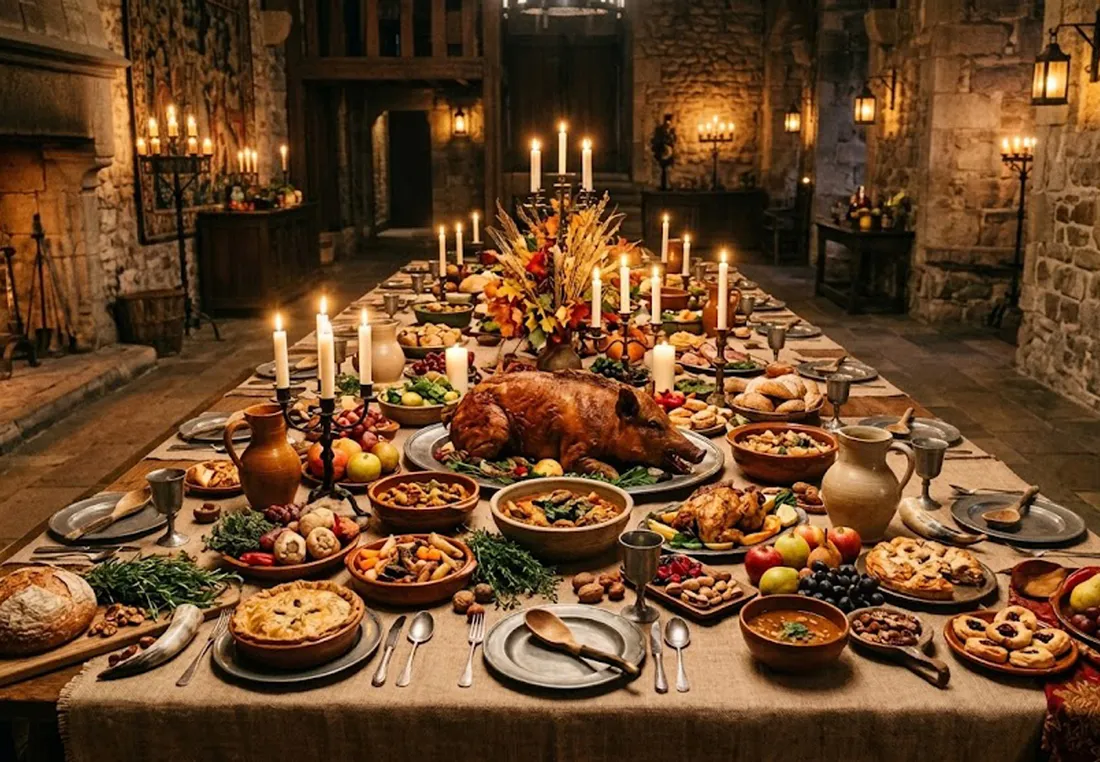
How diners sat and ate at a feast in 15th-century England: seating by rank, hand washing, bread trenchers, shared messes, knives, spoons and courtesy books.
Read the guide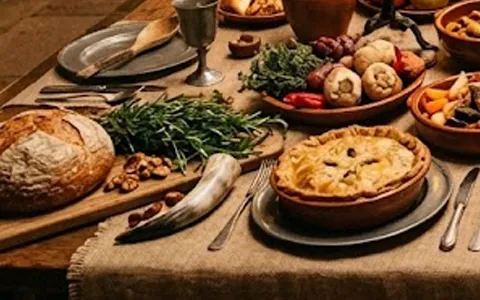
Pottage was the daily dish of medieval England, from a villager's cabbage and leek stew to a king's saffron broths. What went in the pot, thick and thin.
Read the guide
England's oldest salad recipe, the Salat in The Forme of Cury of about 1390, used fourteen herbs and no lettuce. Why raw greens worried medieval diners.
Read the guide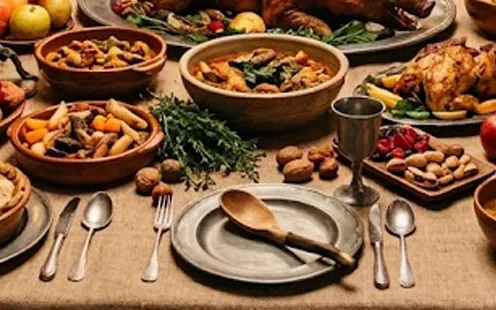
Capon was the prized roast of late medieval England. Which birds were eaten, what they cost, how they were stuffed, spit-roasted, carved and sauced.
Read the guide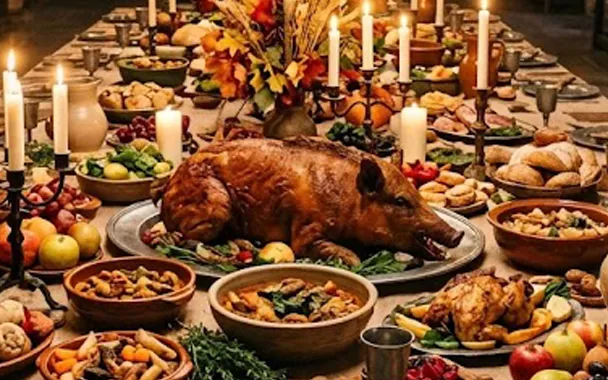
From the Martinmas pig to brawn with mustard at Christmas: how medieval England salted and soused its winter meat, and what its sausages and puddings were.
Read the guide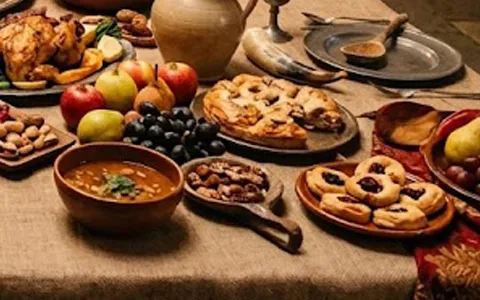
A 14th-century English apple tart of apples, pears, figs, raisins, spices and saffron, plus pastry coffins, keeping pears, wafers and the void. With a recipe.
Read the guide
What filled an English cup around 1420: unhopped ale, the first hopped beer from the Low Countries, Gascon wine and spiced hippocras, with a simple recipe.
Read the guide
Wassail began as a toast meaning "be in good health," then named a spiced Christmas drink and a custom. The history, plus a family-friendly recipe.
Read the guide