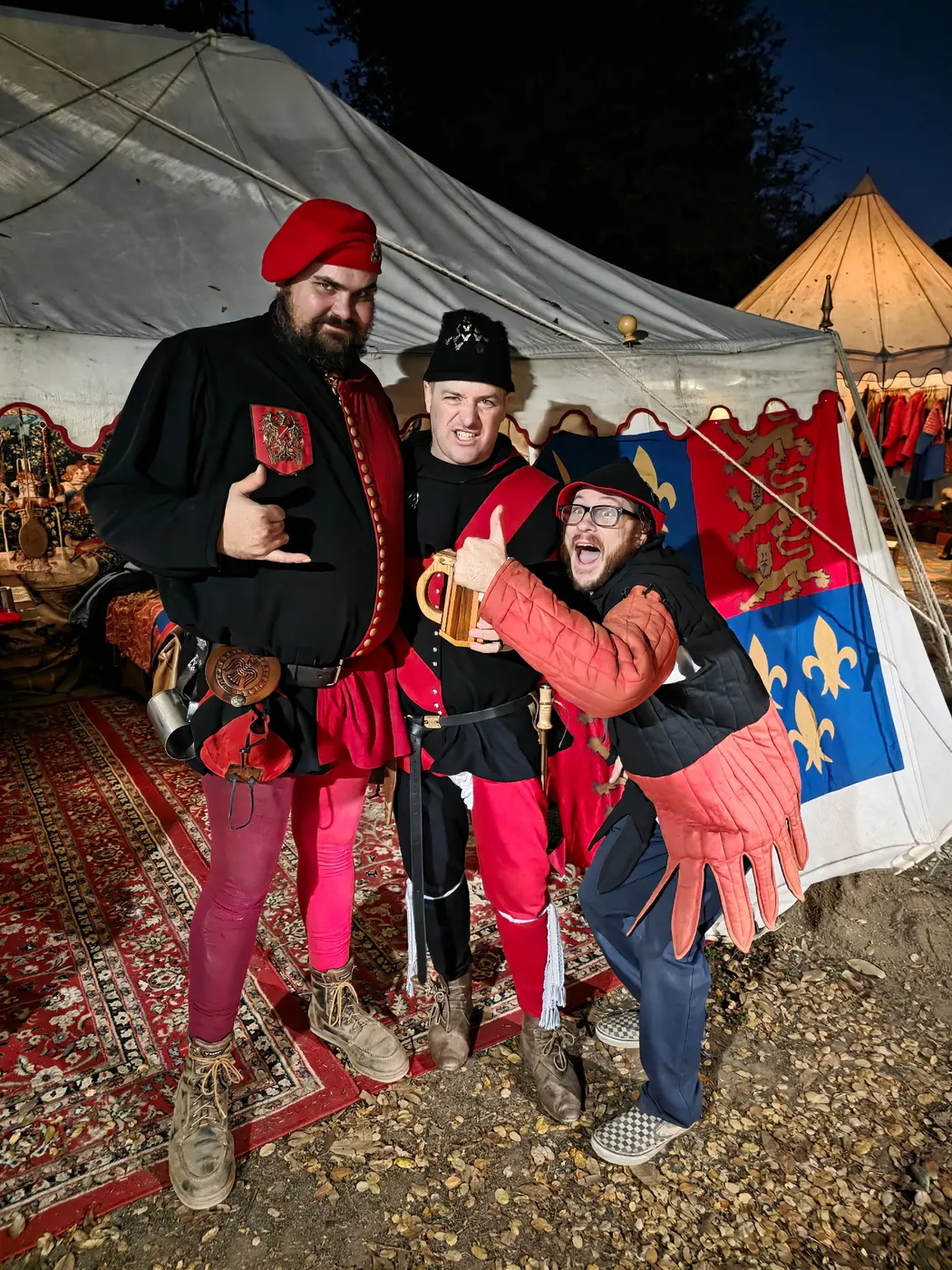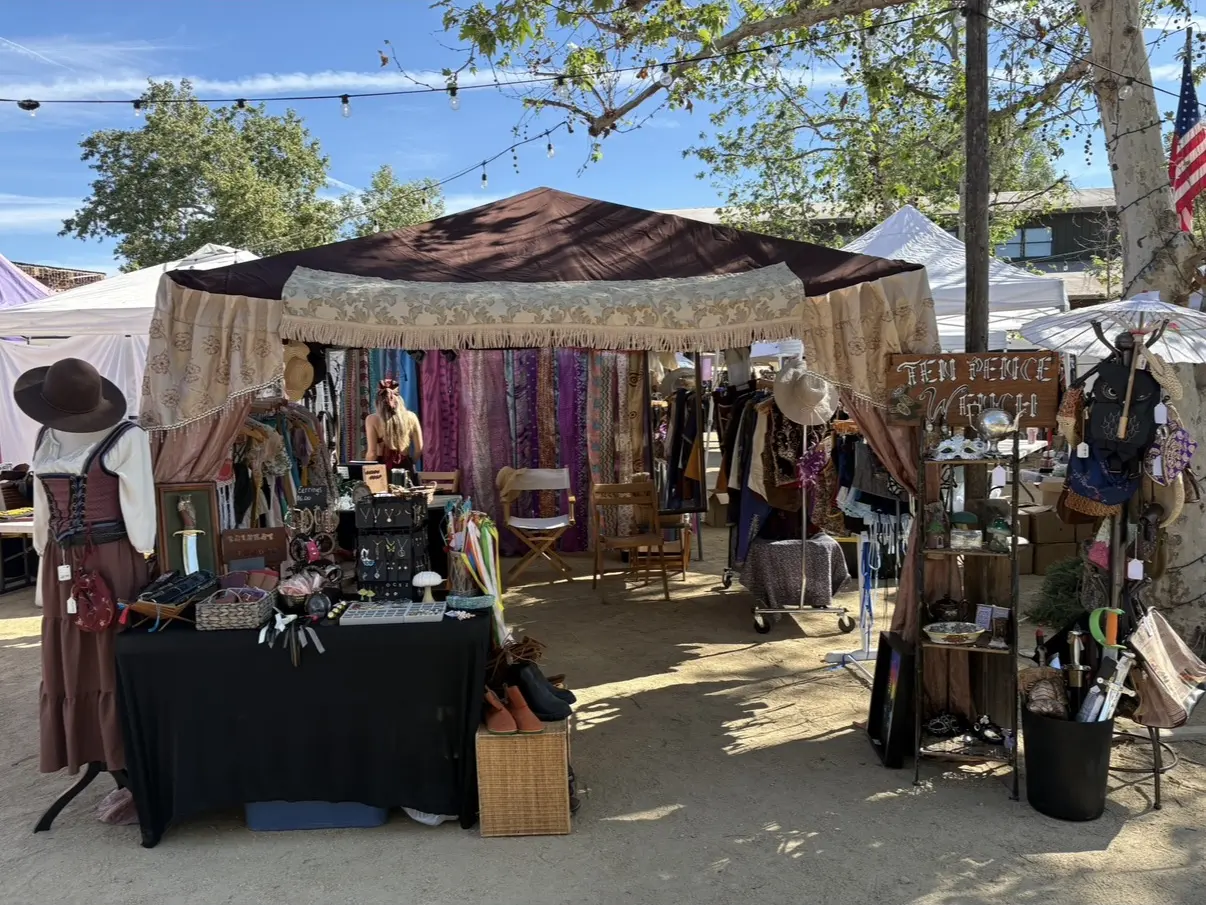
Unless an event says otherwise, you do not need a costume to enjoy a medieval festival: comfortable clothes and good shoes come first. If you want to dress up, a long tunic or gown, a belt, a hood or veil and warm layers will get you close to the 1400s, and they work for adults and kids alike.
The short answer
Wear what lets you walk, sit on grass and stay comfortable all day. Unless an event’s rules say otherwise, costume is a way to join in the fun rather than a requirement, and jeans and a sweater will do. If you want to dress up, think in simple shapes: a long tunic or gown, a belt, something on your head and a cloak or shawl on top. That outline reads as medieval from across a field, even if every piece came from your own closet.
Before you go, check the event’s own rules page for anything about masks, props or replica weapons, and if it says nothing, ask the organizers. Some festivals publish no visitor costume rules at all, so a quick email is the safest way to find out whether a prop sword or bow is welcome.
Easy costume ideas for adults
You can build a convincing medieval look with very little sewing. Aim for natural-looking fabrics and solid colors, and avoid shiny polyester and modern logos where you can.
- Long tunic or gown: a long, loose dress or an oversized linen or cotton shirt worn to mid-thigh or longer, belted at the waist.
- Belt: a plain leather belt or a strip of fabric tied at the waist pulls any tunic into shape and gives you somewhere to hang a pouch.
- Leggings or plain trousers in brown, black, gray or dark green, tucked into boots.
- Hood or veil: a hooded cloak, a wide scarf worn as a hood, or a light veil pinned over the hair.
- Cloak or shawl: the easiest single piece for instant atmosphere, and your warm layer later.
- Pouch or basket: a drawstring pouch on the belt holds your phone, cash and keys out of sight.
Medieval costume ideas for kids
Children are the easiest to dress, and they move around more than anyone, so keep it simple and sturdy.
- Knight: a gray long-sleeve shirt for chain mail, a fabric tabard or pillowcase surcoat with a painted or felt cross or shield, and leggings.
- Princess, queen or lady: a long dress over leggings, a belt and a simple circlet or ribbon in the hair.
- Jester: two contrasting colors split down the middle and a soft hat; great for kids who love to perform.
- Archer or forester: green or brown tunic, hood and a small bag, in the spirit of Robin Hood.
- Skip the long trains and floor-length capes for younger kids; they trip on grass and get muddy fast.
Getting closer to the 1400s
If a festival is set in a specific year, you can tilt your outfit toward it. Many medieval festivals are set in the 1400s; here is what fashionable people wore in the 1410s and 1420s, according to the Fashion History Timeline from the Fashion Institute of Technology.
The signature garment was the houppelande, a long, belted outer gown with a high neckline and long sleeves, often lined with fur and worn by both men and women. Women belted theirs high at the waist. Underneath, women wore a fitted gown over a chemise of undyed linen. Men wore a fitted, padded doublet that ended at the hips, with long hose laced to it; some hose even had leather soles.
Heads were rarely bare. Men wore the chaperon, a draped hood that could be wrapped or pinned into a hat, sometimes over a padded roll. Women wore white linen veils and padded headdresses over hair dressed in rolls at the temples.
Wool was the workhorse fabric, with Flemish wool among the finest, while silk velvets, gold brocade and ermine were for the very rich. Black, red, green and blue were all fashionable. For a modern approximation, a long wool or wool-blend coat belted over a long tunic, with a hood, captures the 1420s far better than a Renaissance-style corset and ruff.
Dressing for a winter festival
December festivals in Southern California can feel like two seasons in one day. In El Cajon, next door to Lakeside in East County San Diego, the Western Regional Climate Center’s long-term records show average December highs near 69°F and lows near 41°F. A sunny midday can be warm, but evenings turn cold quickly once the sun sets around 4:30 p.m.
Medieval clothing was built for this. Layering is both authentic and practical:
- Base layer: a thermal top and leggings under your tunic or gown, invisible but warm.
- Middle layer: a wool tunic, sweater or vest.
- Outer layer: a wool cloak, a long coat belted at the waist or a blanket-weight shawl.
- Head and hands: a hood, knit cap or wrapped scarf, plus gloves for evening.
- Spare dry socks: grass can be damp in the morning and after rain.
Shoes and practical details
Outdoor festivals are usually held on grass and dirt, so footwear matters more than any other piece. Choose broken-in boots or sturdy closed-toe shoes; brown or black leather boots look right with almost any costume. Leave heels and brand-new boots at home.
If you want to borrow rather than buy, reenactment groups can help. The Society for Creative Anachronism, which recreates pre-17th-century life, says its local officers can provide loaner costumes for a newcomer’s first event, which is a good way to try a full outfit before investing in one.
Pockets were not a medieval thing, but they are a modern necessity. A belt pouch, crossbody bag in plain leather or a small basket keeps your phone, ticket confirmation, cash and sunscreen handy. If you plan to stay after dark, add a small flashlight.
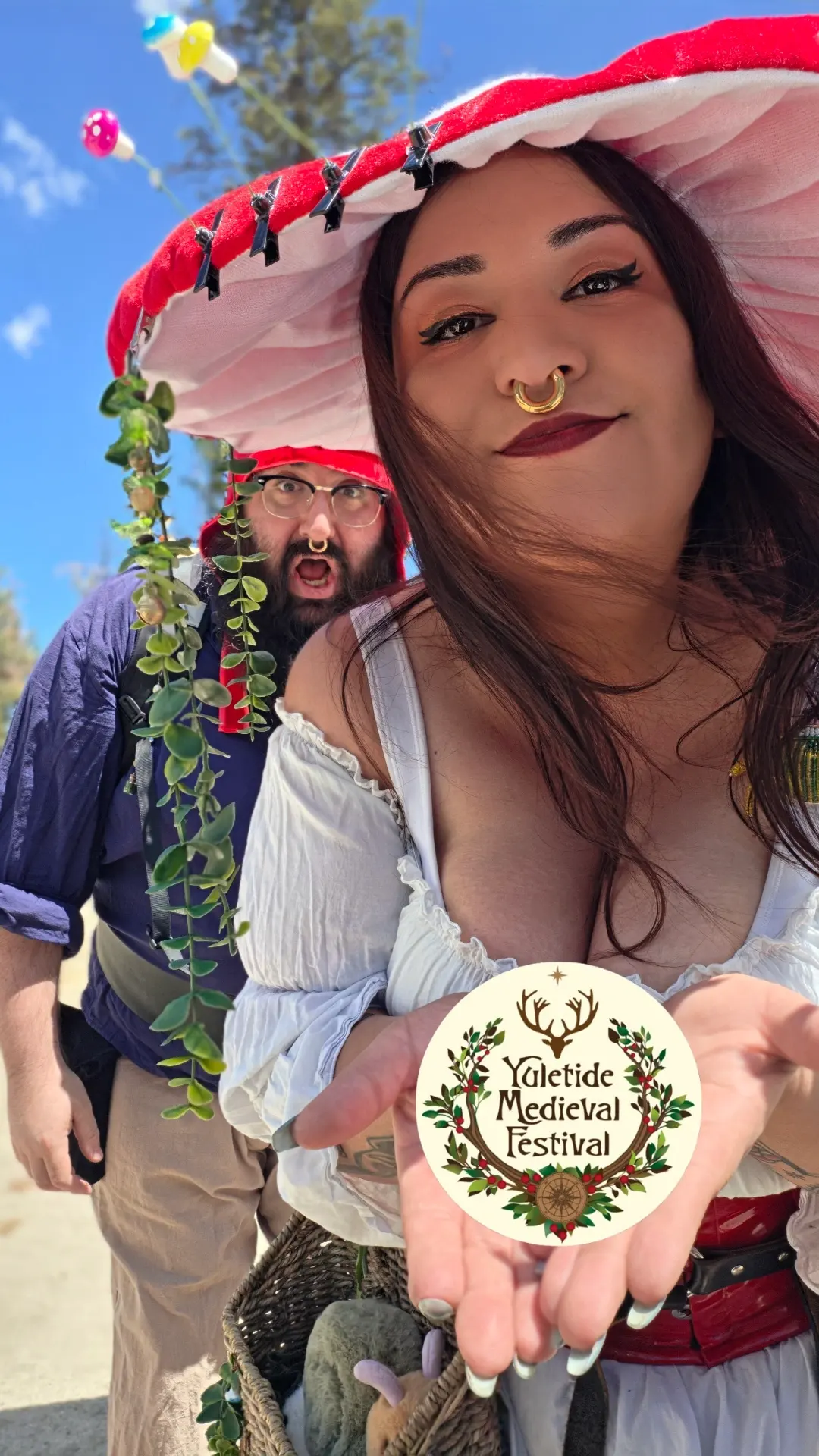
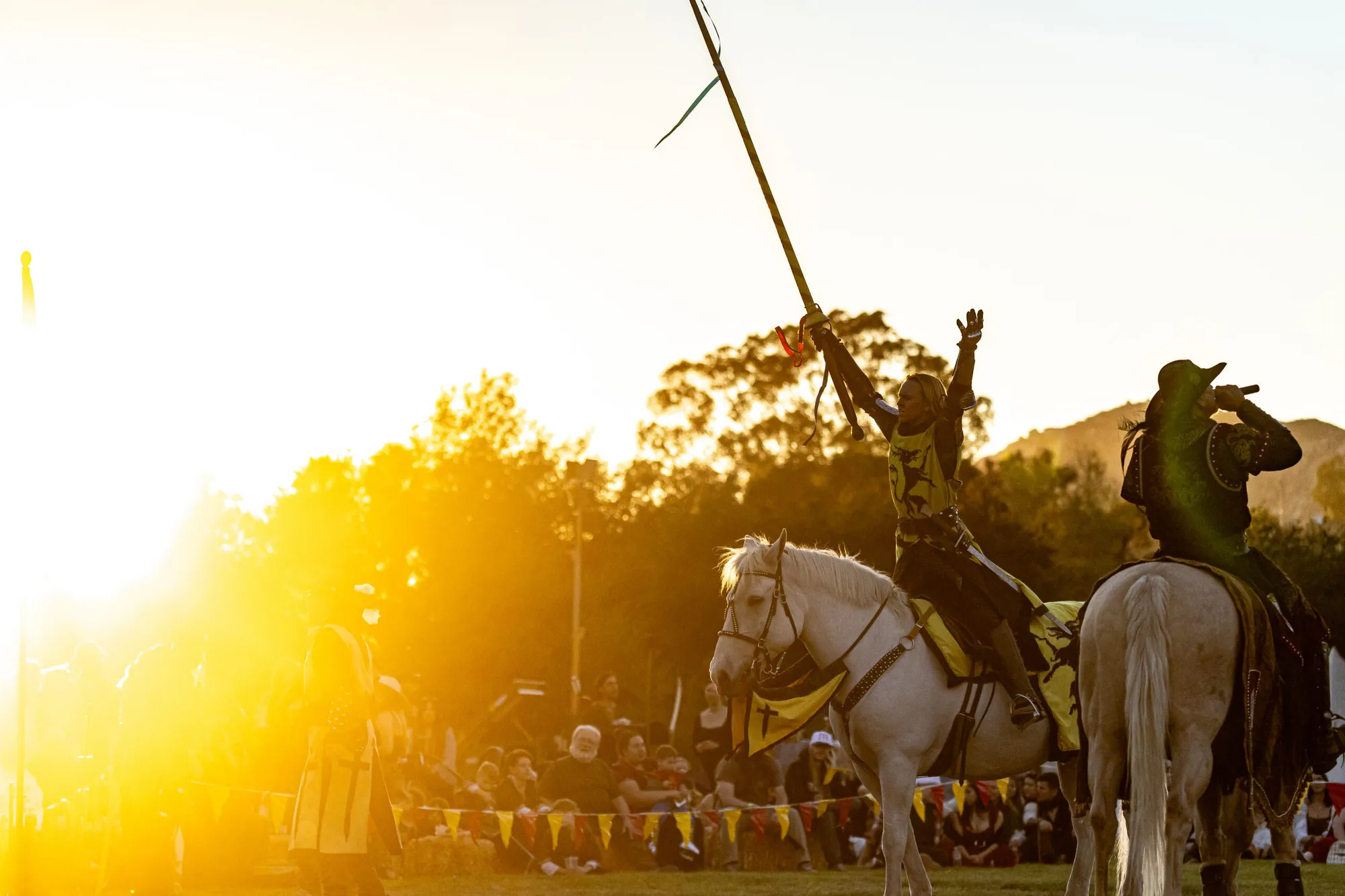
At the Yuletide Medieval Festival in Lakeside, which is set in England in 1420 and runs rain or shine on the park’s grass, Saturday hours run until 8 p.m., well after dark, so bring that warm outer layer even if the afternoon is sunny. The festival has published no visitor costume rules, so call or email if you have a question about a specific prop.
Questions
Do you have to wear a costume to a medieval festival?
Generally not. Public festivals and faires sell tickets to everyone, and costume is a way to join in rather than an entry requirement. If you are unsure, check the event’s rules page or ask the organizers.
What is an easy medieval costume?
A long tunic or loose dress, a belt, plain leggings or trousers, boots and a hooded cloak or shawl. That simple outline reads as medieval and can be built entirely from clothes you already own.
What did people wear in the 1400s?
Fashionable men and women of the 1410s and 1420s wore the houppelande, a long, belted gown with a high neck and long sleeves. Men added a padded doublet and hose and a draped hood called a chaperon; women wore fitted gowns over linen chemises, with veils or padded headdresses.
What should I wear to a winter medieval festival?
Dress in layers: a thermal base, a wool tunic or sweater and a cloak or coat on top, plus a hood or hat and gloves for evening. Choose sturdy, closed-toe shoes for walking on grass.
Sources
- 1420-1429 (Fashion History Timeline), Fashion Institute of Technology
- 1410-1419 (Fashion History Timeline), Fashion Institute of Technology
- El Cajon, California: Monthly Average Maximum and Minimum Temperature, Western Regional Climate Center
- What Is the SCA?, Society for Creative Anachronism