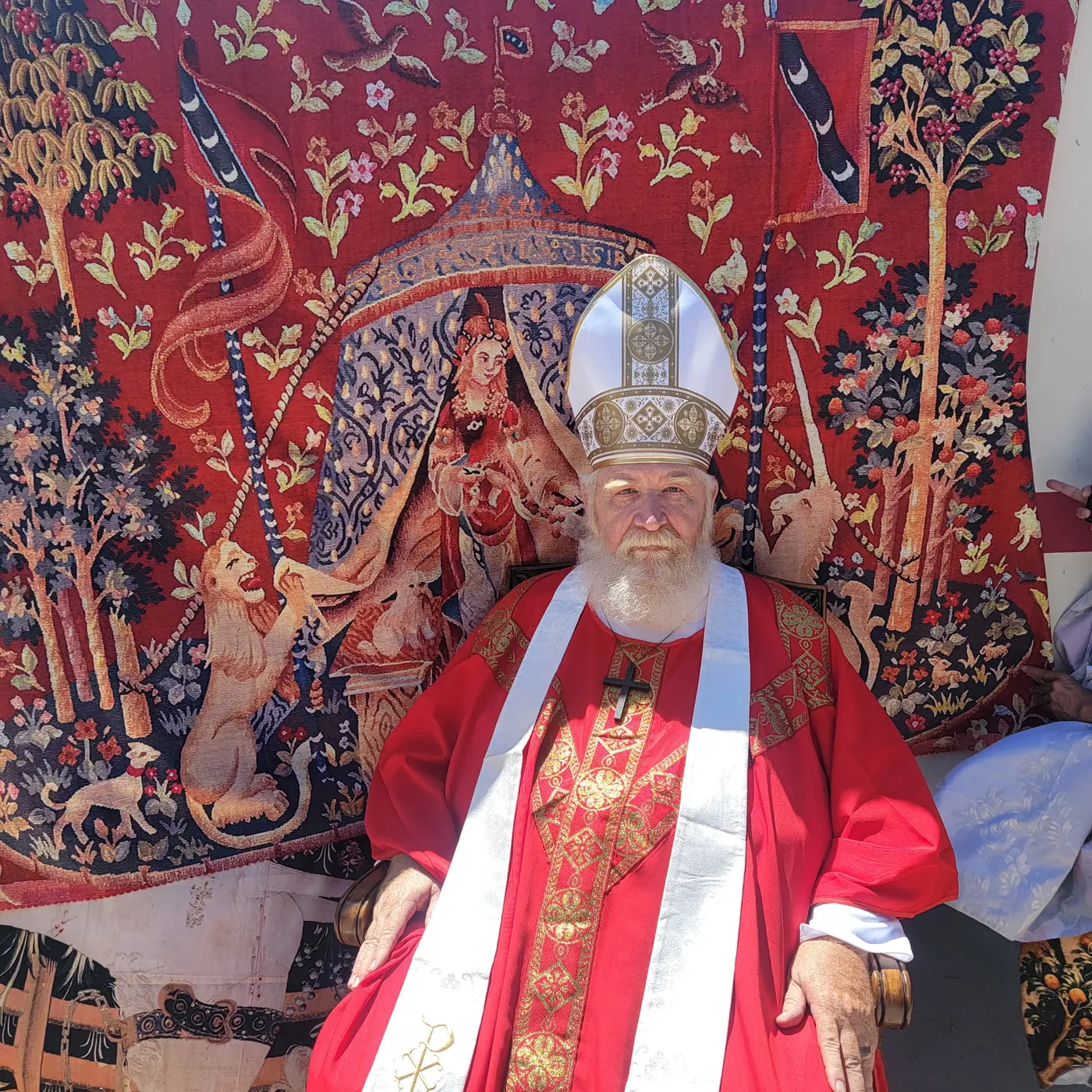
Henry V spent Christmas 1420 in Paris, lodged at the Louvre with his new queen, Catherine of Valois, and Christmas 1421 in camp at the siege of Meaux. Between the two, his only son was born at Windsor on St. Nicholas Day.
A king who kept Christmas far from home
Henry V reigned for just nine years, from 1413 to 1422, and he spent most of his later Christmases in France rather than at Westminster or Windsor. The History of Parliament notes that he kept every Christmas season from 1417 to 1421 across the Channel, as his campaigns in Normandy and beyond stretched through the winters.
Even his first Christmas as king was not quiet. Raphael Holinshed's chronicle, compiled in the 1580s from earlier writers, records that Henry was keeping Christmas at his manor of Eltham when, on the twelfth day of the season, news came that Lollard rebels were gathering in arms near London. He slipped back to Westminster and broke up the rising in St. Giles's Fields. Some later accounts add that the plotters had hoped to reach the king disguised as Christmas mummers, though that detail is less certain than the rising itself.
Holinshed also recalls a gentler Christmas moment. During the bitter siege of Rouen in 1418, starving townspeople were trapped in the ditches between the walls and the English lines, and on Christmas Day, in honor of the Nativity, Henry had food carried out to them. The following year, with Rouen in English hands, he withdrew there to keep the feast.
Christmas 1420: a new queen and the Louvre
The year 1420 was the high point of Henry's reign. In May the Treaty of Troyes made him heir to the ailing French king Charles VI, and on June 2 he married Charles's daughter, Catherine of Valois, at Troyes. On December 1 he made a state entry into Paris. According to Holinshed, the two kings rode through streets hung with rich cloth to Notre-Dame, then parted: Charles to his house of Saint-Pol, Henry to the castle of the Louvre. The two queens made their own entry the next day.
London's civic records confirm that Henry spent Christmas in Paris with his queen and court. The chroniclers dwell on the contrast between the two households. The French king, Holinshed writes, kept a small court, attended by very few people, and those of the meaner sort, while the English king kept a plentiful house, was bountiful in gifts, and put on warlike shows and princely pastimes, so that the nobility flocked to see him. A royal Christmas was politics as much as celebration.
Holinshed dates the court's departure from Paris to January 6, 1421, Epiphany, the traditional close of the twelve days. Henry and Catherine moved on to Rouen and reached England at the start of February. Catherine was crowned at Westminster later that month; the sources differ on whether it was February 23 or 24. Because it fell in Lent, her coronation banquet was served entirely of fish.
Christmas 1421: a siege, and a son born on St. Nicholas Day
Henry returned to France in June 1421, and by October he was besieging Meaux, a fortified town on the river Marne about 30 miles east of Paris. The History of Parliament describes him lodging first at Rutel, west of the town, and then at the abbey of Saint-Faron to the north.
Back in England, Catherine gave birth at Windsor Castle on December 6, 1421, the feast of St. Nicholas. Eton College, which the boy would later found, notes the St. Nicholas Day birthday in its own account of his life. Holinshed tells a story that, on hearing his son was born at Windsor, Henry predicted that the Monmouth-born Henry would reign briefly and win much, while the Windsor-born Henry would reign long and lose all. The tale was written down long after events had played out exactly that way, so it is best read as hindsight.
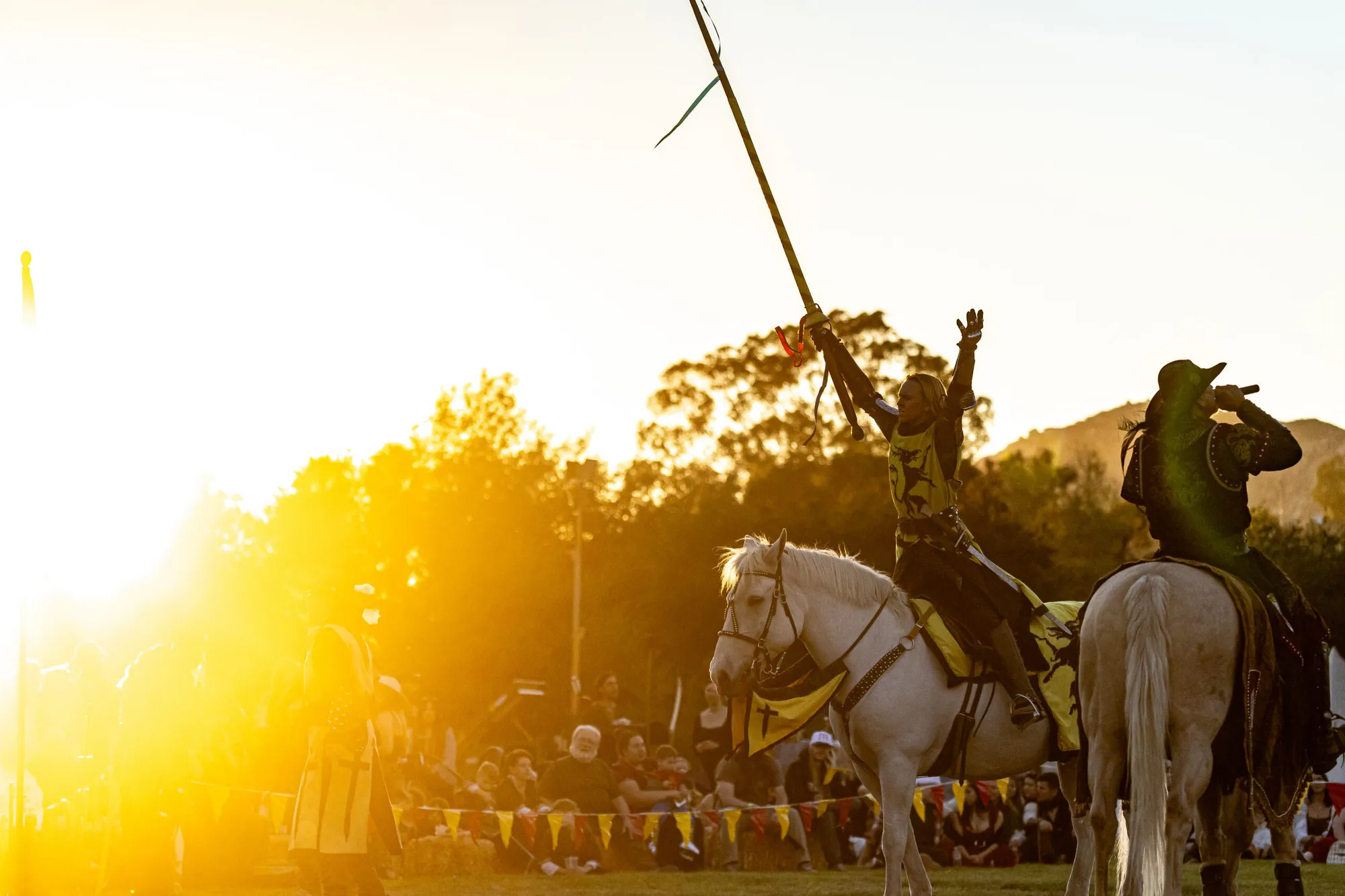
There was little feasting at Meaux. Holinshed reports that Henry held his Christmas at the siege and refused to give it up, even though his army was shrinking from lack of food, extreme cold, foul weather and disease. The town held out until May 1422. Henry died at Vincennes, near Paris, on August 31, 1422, probably of dysentery, without ever seeing his son. At Yuletide Medieval Festival, the Battle of Meaux is the episode brought back to life in the field.
How a royal Christmas worked in 1420
Wherever the king was, the season followed a familiar shape. Christmas Day opened twelve days of holiday that ran to Epiphany on January 6, with Twelfth Night as a final burst of celebration. Great households served long banquets of many courses, and royal kitchens were expected to cook far more than the hall could eat.
Gifts belonged mainly to New Year's Day rather than Christmas, and occasionally to Twelfth Night. At court they were a public measure of standing: the more lavish the gift, the higher the esteem. Entertainment leaned toward disguise. Courtiers and visiting townsfolk put on masks and costumes for masquerades and mummings, the same tradition that would give Henry's young son a series of written court entertainments a few years later.
- 1413: Christmas at Eltham, cut short by news of the Lollard rising
- 1418: Christmas Day at the siege of Rouen, with food sent to the starving poor
- 1420: Christmas in Paris, with Henry lodged at the Louvre
- 1421: Christmas at the siege of Meaux, weeks after Henry VI's birth
Questions
Where did Henry V spend Christmas 1420?
In Paris. He entered the city on December 1, 1420, lodged at the Louvre, and kept Christmas there with Queen Catherine and his court. Chroniclers contrast his lavish household with the small court of the French king Charles VI at the Hôtel Saint-Pol.
Was Henry VI really born on St. Nicholas Day?
Yes. Henry VI was born at Windsor Castle on December 6, 1421, the feast of St. Nicholas. His father was besieging Meaux in France at the time and never met him.
Did Henry V celebrate Christmas during the siege of Meaux?
He kept the feast in camp. Holinshed says he held his Christmas at the siege and refused to abandon it despite cold, hunger and sickness in his army. The town finally fell in May 1422.
When did medieval English royals exchange gifts?
Mostly on New Year's Day, sometimes on Twelfth Night, rather than on Christmas Day. At court, the value of a gift signaled how highly the giver and the receiver stood.
Sources
- Holinshed's Chronicles, vol. 3: England, 1413-1423, Henry V, Project Gutenberg
- 1421: a troubled royal Christmas, The History of Parliament
- Calendar of Letter-Books of the City of London: I, Introduction, British History Online
- Young Henry (Henry VI online exhibition), Eton College Collections
- Henry V of England, World History Encyclopedia
- Medieval and Tudor Christmas Courts, Britain Express